Step 1 — Tree Selection
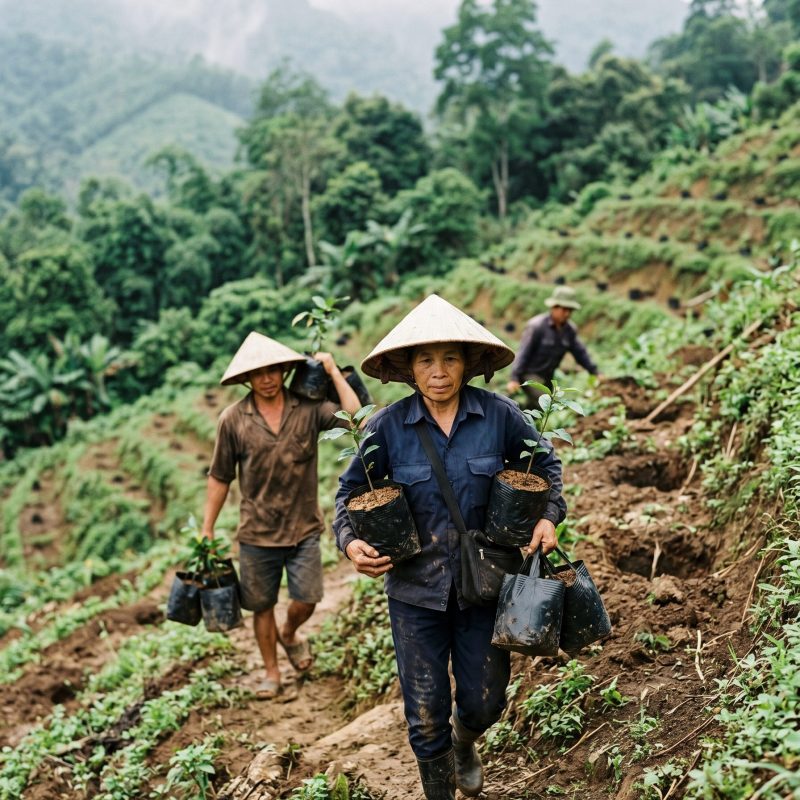
Aquilaria trees are selected at 5 to 7 years of age, with a minimum trunk diameter of 20cm. Trees must be grown under stable conditions — temperatures between 20–30°C, humidity between 70–90%, and well-drained, nutrient-rich soil. Proper selection at this stage is critical to ensuring successful resin formation.
Step 2 — Creating the Wound Points
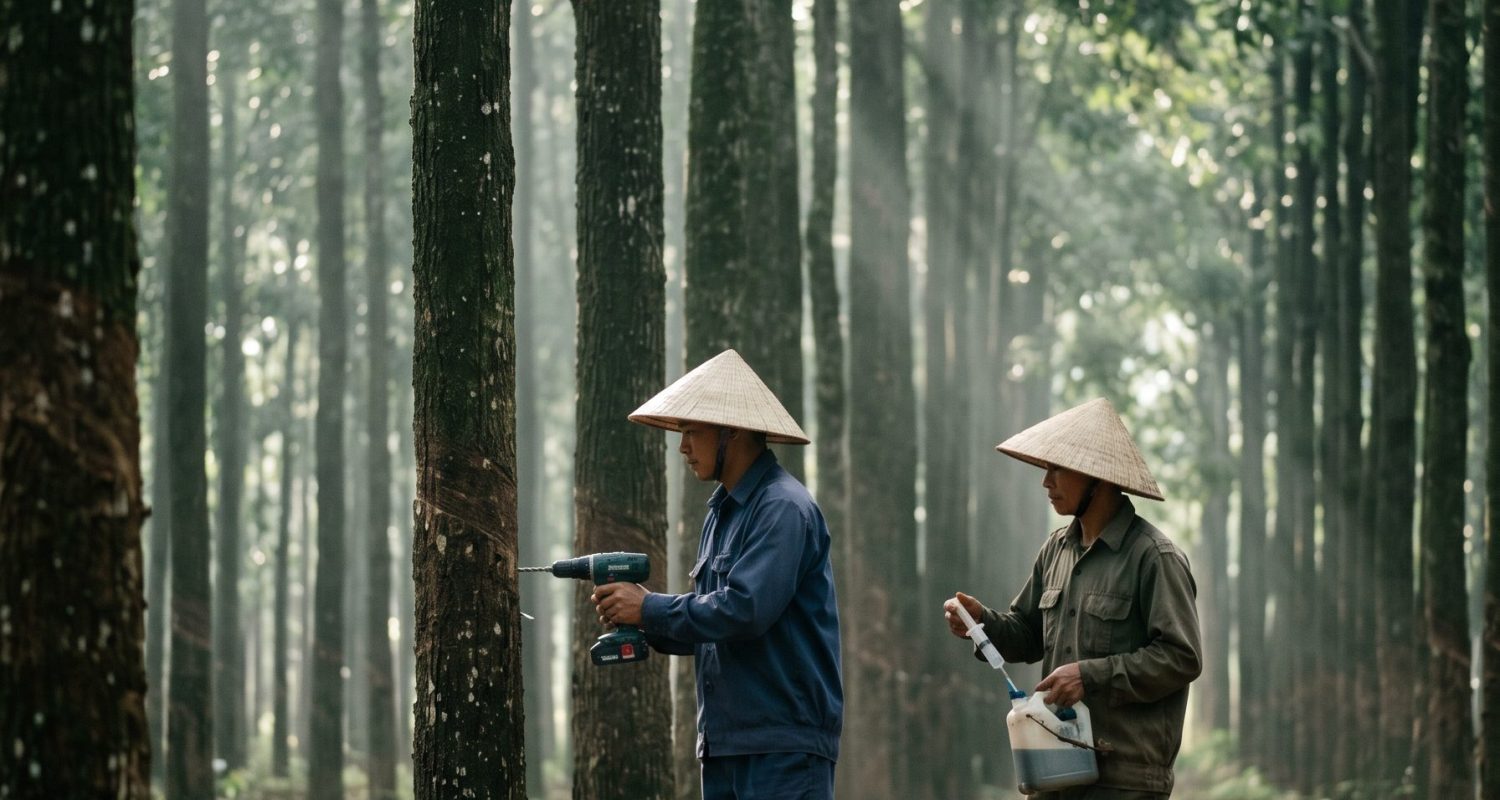
Small holes are drilled into the trunk, each measuring 0.5 to 1cm in diameter and 1 to 2cm in depth. Holes are spaced 2 to 3cm apart, beginning at least 1 metre above ground level. Horizontal spacing is maintained at 10 to 15cm, with 1 metre vertical spacing between rows. This structured pattern allows for even resin distribution throughout the heartwood.
Step 3 — Inoculation
A biological preparation containing selected fungi or beneficial bacteria is introduced directly into the drilled points. These organisms trigger the tree’s natural defence response, stimulating oleoresin production — the key component of agarwood. The process is carefully controlled to maintain tree health and prevent contamination.
Step 4 — Growth Regulation (Optional)
In selected cases, growth regulators such as jasmonate (0.5–1mM) may be applied to enhance terpene and phenolic compound production. This step is optional but can improve overall resin quality and grading potential.
Step 5 — Environmental Management
During the resin formation phase, environmental conditions are maintained consistently — humidity at 70–90%, temperatures between 20–30°C, and natural light exposure of 12 to 14 hours daily. Organic fertilisation is applied regularly to sustain soil health. Stable conditions directly impact both the quality and rate of resin development.
Step 6 — Harvest
Within 6 to 18 months, trees are assessed for resin formation. Indicators include deep brown coloration within the heartwood and the presence of a rich agarwood aroma. Resin-rich sections are carefully extracted and undergo quality verification, including chemical analysis, before grading and processing.
Microbiological Inoculation Process
A step-by-step breakdown of the inoculation process — from tree selection to harvest-ready resin formation.
Note on the Process
Resin formation timelines may vary depending on tree condition, soil quality, and climate. This method accelerates agarwood development compared to natural formation, while maintaining an environmentally responsible approach.